
Powder Handling & Processing Equipment and Systems
Big Bag Discharging Station
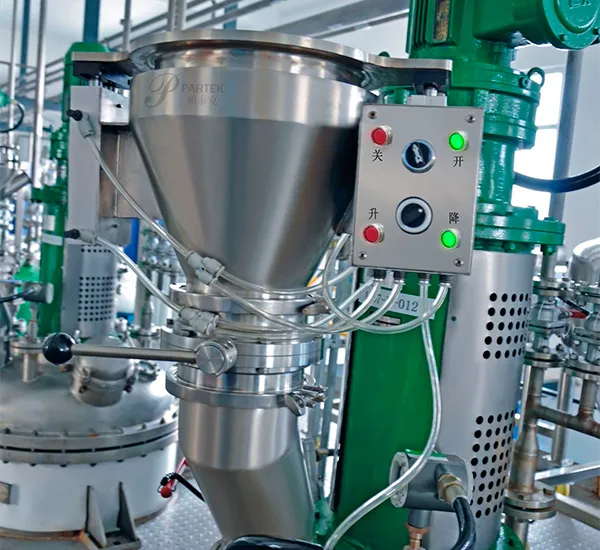
Bulk bag unloader for dust-free discharge of powders and dry bulk materials from big bags (FIBCs) into a powder processing system

- Applicable bag: FIBC bulk bags (tonne bags)
- Hoist lifting capacity: 0.2-1.5T
- Working pressure: 0.5-0.6MPa
- Operating temperature: -20℃ to 45℃
The big bag discharging station lifts the FIBC to the feed inlet, where the operator manually releases the bag outlet tie and initiates discharge. A bag agitation device assists the smooth flow of powder or granular material by gravity into the buffer hopper, from which a screw conveyor transfers the material to the next process stage. This setup ensures clean, efficient, and controlled unloading suitable for pharmaceutical, chemical, and food industries.
Features
- Safe and reliable structure
Product contact parts are available in SS304 (food grade) or SS316L stainless steel for corrosion resistance and compliance with hygiene standards in pharmaceutical and chemical environments. - Reduced manual handling
The big bag is lifted by an electric hoist and secured to a rigid frame. Operators can control lifting and positioning along a traveling rail system to place the bag accurately above the discharge area. After unloading, the clamp mechanism releases the empty bag, allowing safe and convenient removal.
Typical Applications
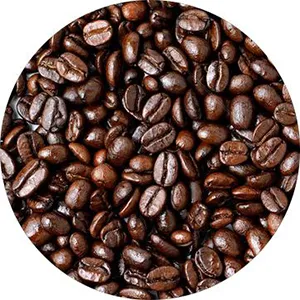 Coffee beans
 Food additives
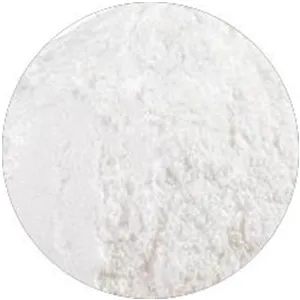 Inulin
Customizable Options
- Core functional modules
Load capacity: Configurable for FIBC bags ranging from 200 to 1500kg
Equipment dimensions: Adjustable in length, width, and height according to plant layout or space constraints
Material construction: Product contact surfaces available in SS304 (food grade) or SS316L stainless steel for corrosion resistance in pharmaceutical and chemical applications - Adaptation for special conditions
Sealed and eco-friendly design: Fully enclosed structure prevents dust leakage and ensures clean operation
Inert gas protection: Optional nitrogen purging system for flammable, explosive, or oxidation-sensitive materials - Structural and configuration options
Lifting system: Custom electric hoist design supporting 1–3 ton lifting capacity with tailored lifting height
Downstream connectivity: Compatible with silos, screw conveyors, or tubular chain systems; customizable flange interfaces available for seamless integration
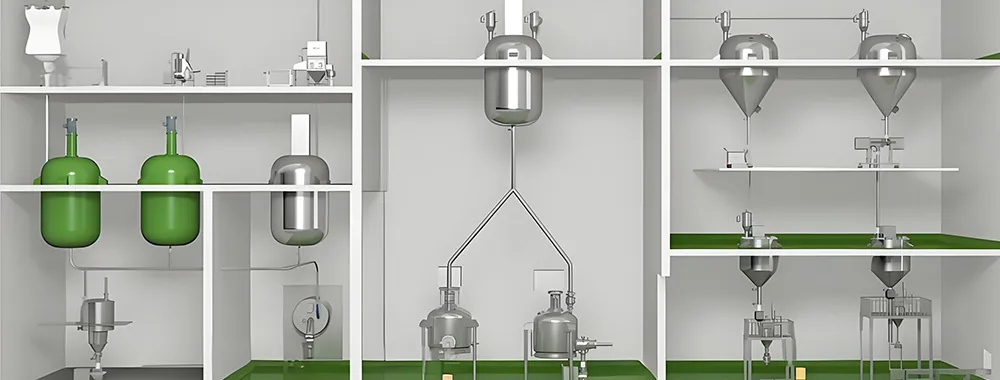
For powder processing, we also provide a one-stop solution.
Is the equipment suitable for powders or granules used in pharmaceutical, food, or chemical production?
Is the equipment suitable for powders or granules used in pharmaceutical, food, or chemical production?
The powder processing and palletizing equipment is widely used in pharmaceutical, food, and chemical applications. Selection can be made based on material type (e.g. wet, dry, or fragile), flowability, and target throughput. Based on these parameters, a suitable model and configuration are recommended for the intended process.
Can the equipment handle high-temperature, viscous, flammable, explosive, or corrosive materials?
Can the equipment handle high-temperature, viscous, flammable, explosive, or corrosive materials?
Our powder handling equipment can be built using high-temperature-resistant, corrosion-resistant, and explosion-proof designs. Typical options include 316L stainless steel construction, PTFE sealing, explosion-proof motors, and nitrogen inerting systems.
Does the equipment comply with GMP requirements?
Does the equipment comply with GMP requirements?
Our powder processing machines are designed in line with GMP requirements. Product-contact surfaces can be supplied in SS304 or SS316L with polished finishes down to Ra ≤ 0.4 μm, suitable for installation in clean production areas.
Can the production line be customized to match specific output targets and plant layout constraints?
Can the production line be customized to match specific output targets and plant layout constraints?
Complete lines can be tailored, including equipment footprint, capacity range, and inlet/outlet height, to achieve direct integration into existing processes.
Can electrical specifications and control systems match local standards in different countries?
Can electrical specifications and control systems match local standards in different countries?
Voltage and frequency can be supplied according to regional standards (for example 220 V / 380 V / 415 V, 50 Hz / 60 Hz). Control systems can include PLC and HMI with Siemens or Schneider electrical components.